
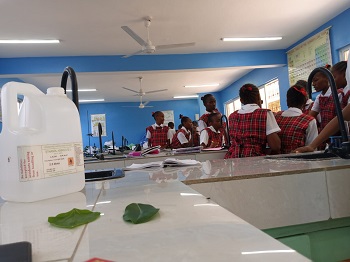
At St. Joseph Allamano School, science learning recently came alive through an engaging laboratory session where students explored two important biological concepts: Testing for starch in leaves and observing Onion cells using a microscope. These practical activities enabled learners to connect theoretical knowledge with real scientific investigation.
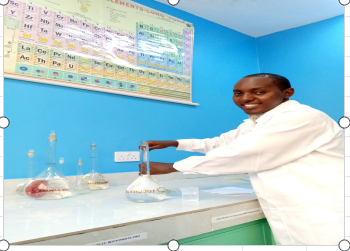
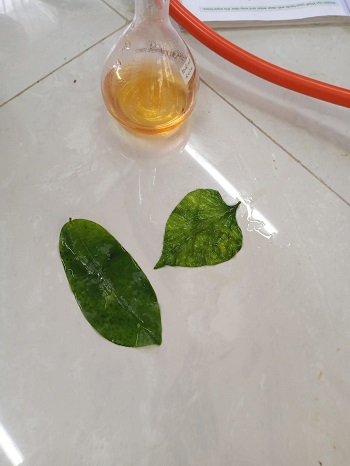
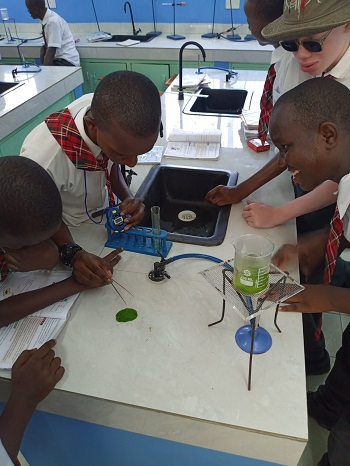
The first experiment focused on testing for starch in green leaves, an essential process in understanding photosynthesis. Students used leaves that were first boiled in water for about ten minutes as part of the preparation process. This step helped to kill the cells and soften the leaf, making it easier for further treatment. Afterward, the leaves were treated to remove chlorophyll so that any color change would be clearly visible.
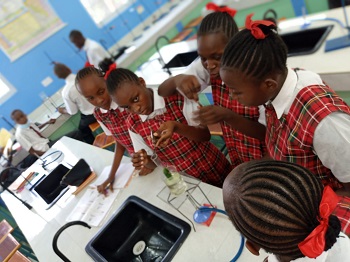
When iodine solution was finally added, parts of the leaf turned blue-black, indicating the presence of starch. This confirmed that photosynthesis had taken place in those regions, as starch is one of its products. The experiment provided a clear and visual demonstration of how plants manufacture and store food.
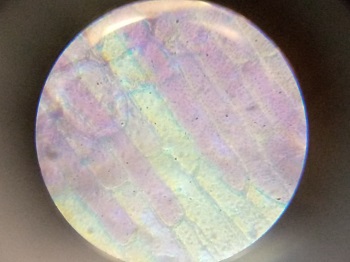
The second experiment involved observing onion cells under a microscope. Students carefully peeled a thin layer of onion epidermis and placed it on a glass slide. A drop of iodine solution was added to stain the cells, enhancing the visibility of their internal structures. The slide was then covered with a cover slip and observed under a microscope.
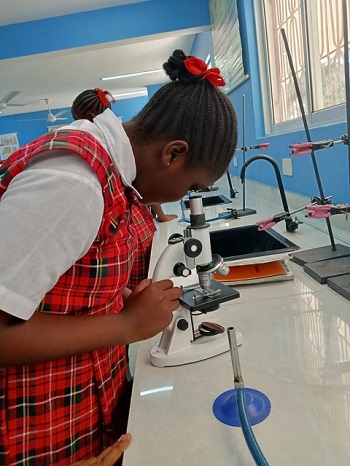
Through the microscope, students were able to see the onion cells clearly. The cells appeared rectangular and were neatly arranged in rows. The cell wall was distinctly visible, giving each cell its definite shape. The nucleus appeared as a darker spot within the cell, while the cytoplasm occupied the inner region. This allowed learners to directly observe structures they had previously only studied in theory.
In addition to understanding scientific concepts, the practical session also helped students develop essential laboratory skills. They learned how to prepare specimens, handle laboratory equipment carefully, and use a microscope effectively. These skills are fundamental in scientific learning and experimentation.
Overall, the session at St. Joseph Allamano School demonstrated the value of hands-on learning in science education. By actively engaging in experiments, students deepened their understanding and developed curiosity about the natural world.
In conclusion, the practical activities transformed classroom concepts into real experiences, showing that science is best understood through observation and experimentation.By JK.
wish you all the best